
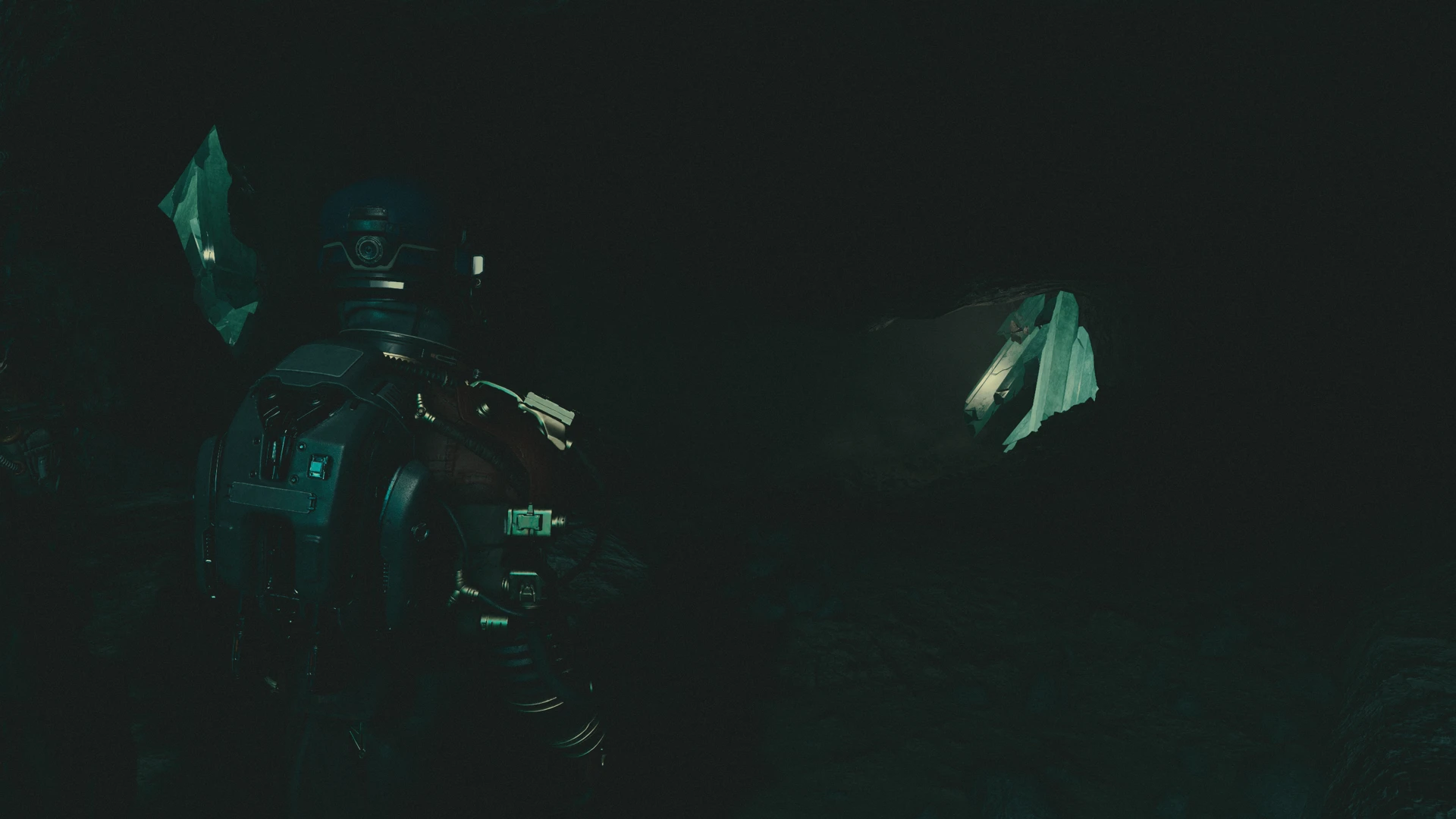
Did it ever happen to you that you are playing a dark game in dimly lit room on your OLED, and suddenly notice the "floor" in the game felt like it was emitting light?
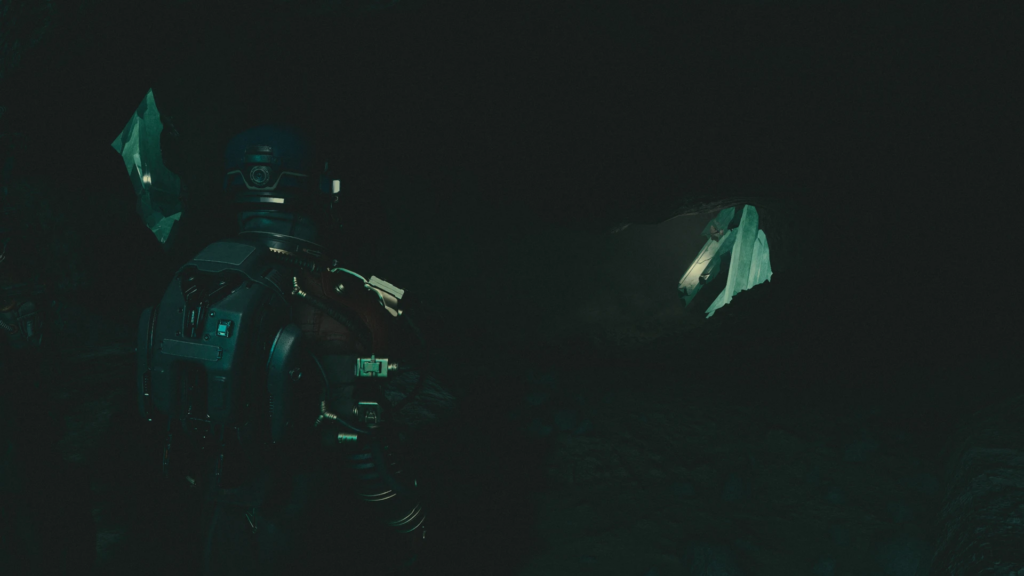
Many players expressed a visual dissonance between being in a supposedly unlit cave, and having their tv blast light in their eyes.
This effect is called "raised blacks" or an "elevated black floor", and it's a color grading practice many games use for a few reasons.
1) The first reason is stylistic: going for a washed out look that reminds of disposable cameras can look absolutely stunning, and there's usually nothing wrong with that (unless it causes issues with gameplay visibility, given that unlike movies, it's a factor in video games).
Either way, this is generally not the look games go for, and the main reasons are often others.

2) A second reason is to create an approximate cheap "fog" effect; however, this doesn't really work as the fog intensity doesn't scale with distance (depth), so it doesn't hold up perceptually. Nowadays games can generally afford to emulate fog in more appropriate ways.
3) The third and most common reason is to improve visibility in shadow (and optionally tinting them), and that's where issues start!
Since the advent of HDR and linear rendering (~20 years ago), the vast majority of games have used what is called a "filmic tonemapper": Uncharted 2/Hable, ACES, etc.
These have the characteristic of crushing shadows, increasing the "instant appeal" of the image.
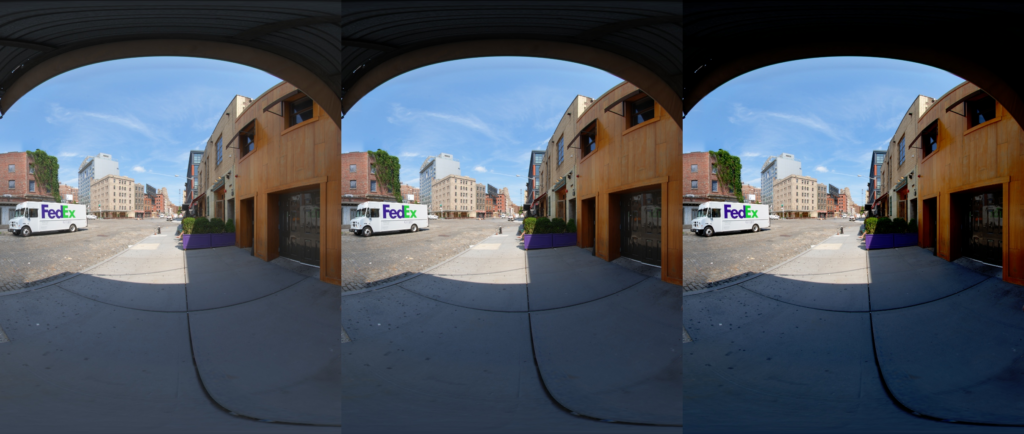
These filmic S curves effectively became a standard and "default" in game engines (e.g. Unreal, Unity). Games that do not employ them often stick out from the competition.
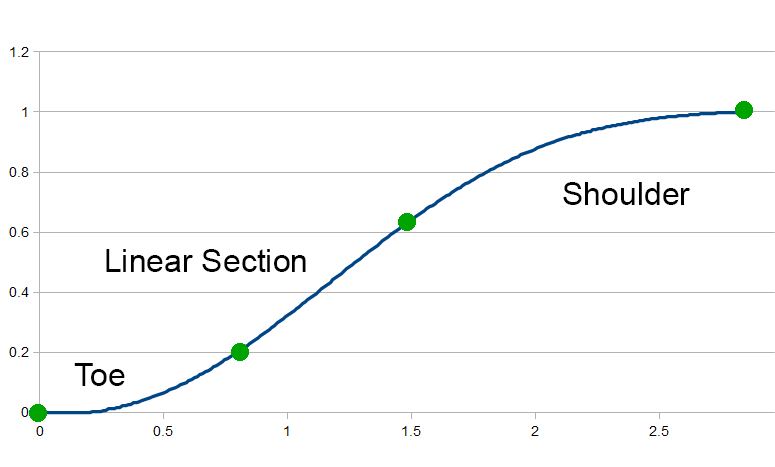
You can for example imagine how crushing shadows doesn't always go well with dark/horror games, where most pixels lie in the shadow region. Filmic tonemappers effectively squish all shadows into a single black pool.
Games are then also often developed and graded in bright rooms (given that they are mostly developed in offices, during daytime hours), and on relatively cheap and non calibrated LCD displays.
LCDs noticeably have no capacity to display pure black, and generally have bad contrast/detail in the shadow area, mushing everything together.
We then additionally need to consider the fact that the SDR encoding and decoding transfer functions (colloquially "gamma") are almost always not matched (sRGB / gamma 2.2), causing further crushing in shadow, and that many game engines have quantization problems that cause the image to lose quality down to 6-8 bits.
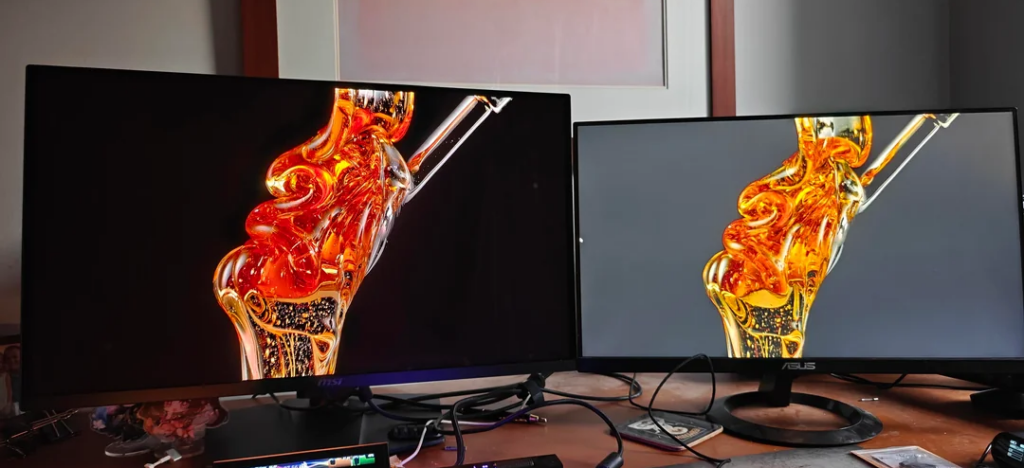
In the case of artists wanting to uniformly tint the image, most game engines rely on antiquated RGB color grading logic that is unable to tint shadows without raising them.
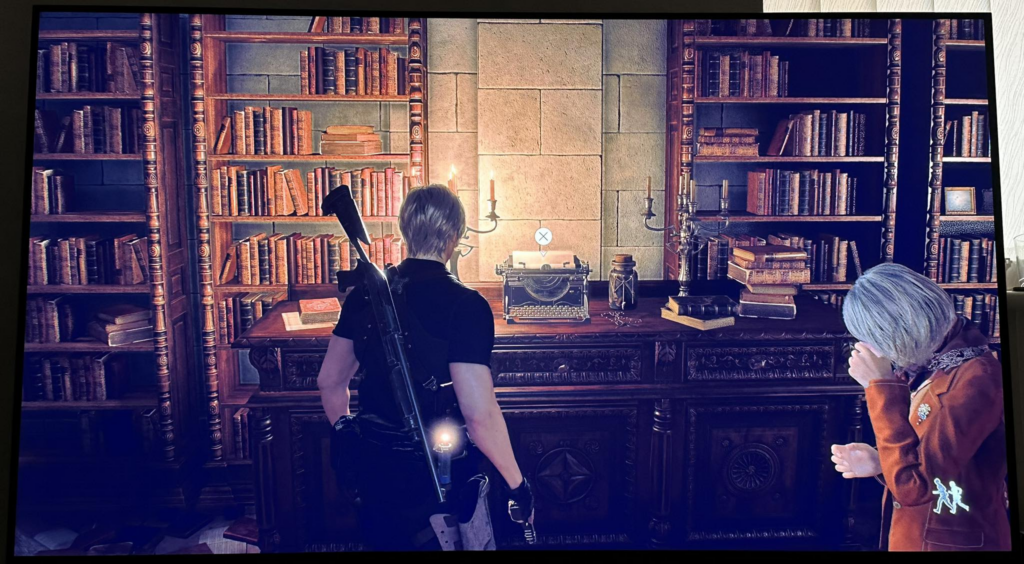
When you put all the factors above together, you might start to see why artist end up thinking that the only way they have to allow players to see in the shadows is to raise the black floor, especially when the other known options (increasing the exposure or implementing a new tonemapper), either ruin the mood or are technically hard.
Unfortunately, when games are viewed in a properly dim environment on OLED displays, this is often far from the truth!
Here are two photos of REANIMAL with the black floor raised, and without, on an OLED.
While the color tint captured here is not representative of how it looked in person, the detail visibility is.
You might then wonder if there's a right approach that looks good on all displays and viewing conditions?
While that might sound too good to be true, in our work we have developed ways of modulating shadows to look good on both OLED and LCD displays, while also looking consistent between SDR and HDR (a problem many games have, especially on shadows), and with the ability of tinting shadows to give a vibe to the scene.
It should be noted that occasionally, for games that are graded in proper viewing conditions and displays, raised blacks could be used as a gameplay tool to dampen near black visibility, and thus boost the fear factor, however based on my other findings, I have little reason to believe this is often the case.
TL;DR: why do some (often horror) games resort to raising blacks to (supposedly) boost near black visibility?
- Grading in bright rooms, on LCDs (bad contrast, shadows mushes together)
- Filmic tonemappers crushing blacks before grading, taking away shadows visibility
- Improper usage of SDR transfer functions (gamma, crushing shadow)
Do note that this article isn't talking about the fact that many games in HDR have a lower shadow contrast compared to SDR (which is the visual reference). That has a specific technical reason and it will be explained in another article.
Bonus image